

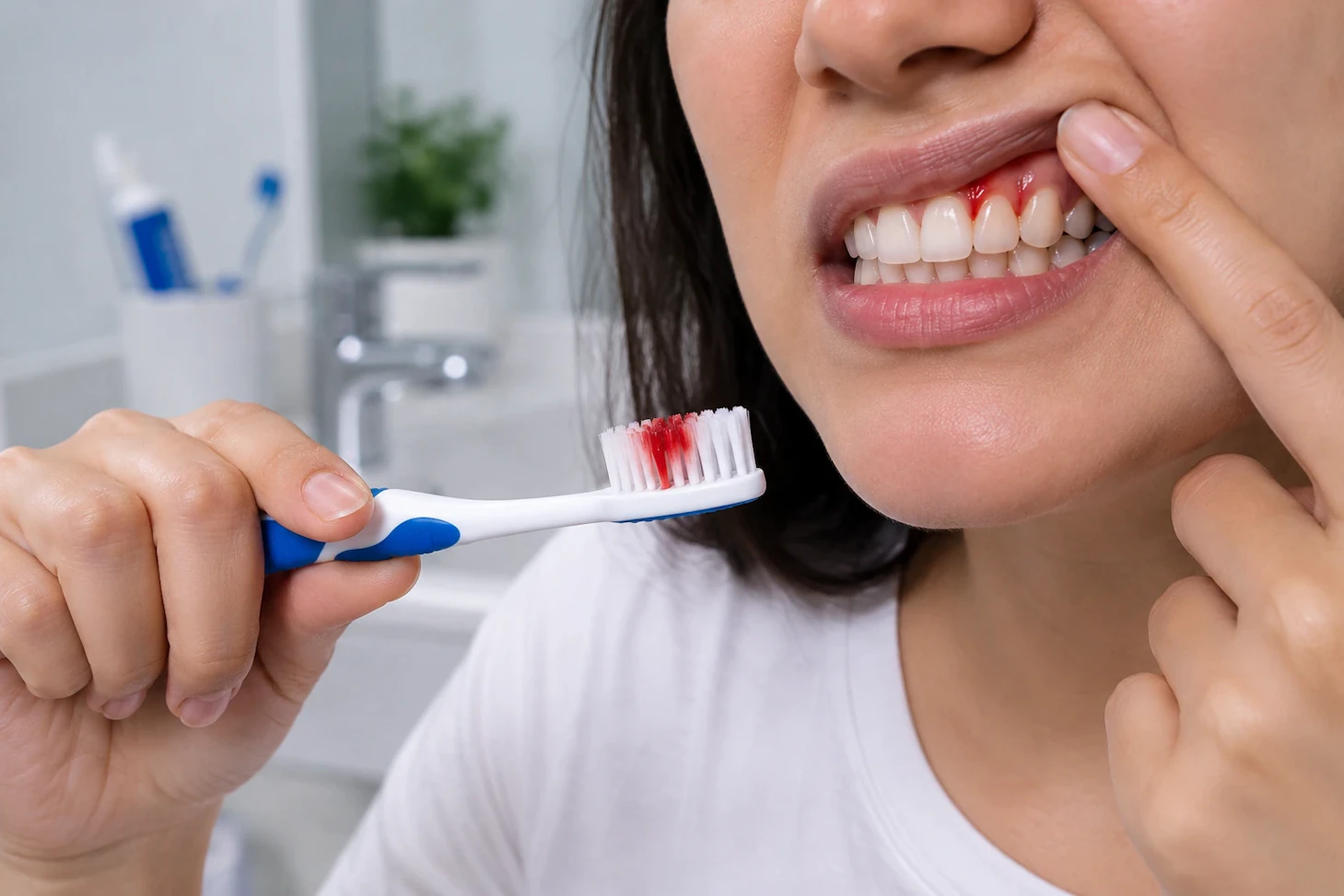
If your gums bleed when you brush, it’s easy to shrug it off, especially if it happens often. In most cases, bleeding gums when brushing are a sign of gum inflammation, usually caused by plaque along the gumline.
Here’s why it happens, what it can mean, and when it’s worth seeing a dentist.
Why Do Gums Bleed When You Brush?
Plaque is a soft, sticky film of bacteria that forms on your teeth daily. Left along the gumline, it irritates the gum tissue, making it redder, softer, and more likely to bleed when touched by a toothbrush or floss.
Occasional bleeding like after starting a new flossing habit, usually settles within a few days. Bleeding every time you brush, or bleeding that lasts more than one to two weeks, points to gum inflammation worth addressing, though it doesn’t necessarily mean the problem is severe. Most bleeding gums reflect early-stage inflammation (gingivitis), not advanced gum disease.
Gingivitis vs Periodontitis
- Gingivitis is gum inflammation caused mainly by plaque. It shows up as redness, swelling, tenderness, and bleeding, usually without pain, which is why it’s easy to miss. It often improves with better plaque removal, sometimes with a professional cleaning.
- Periodontitis is more advanced. It spreads into the tissue and bone supporting the teeth and can lead to loose teeth if left untreated.
What Causes and Worsens Bleeding Gums?
- Brushing too hard which irritates gum tissue on its own
- New flossing habits often causing mild bleeding for a few days as gums adjust
- Hormonal changes including pregnancy, which increase gum sensitivity
- Smoking or tobacco use which slows healing and interferes with gum tissue recovery
- Diabetes especially with unmanaged blood sugar
- Certain medications including some blood thinners
- Poor plaque control generally
A risk factor doesn’t guarantee gum disease, but if any of these apply to you, it’s worth extra attention to plaque removal and regular visits.
How to Care for Bleeding Gums: Should You Stop Brushing?
No, stopping brushing around bleeding gums can allow plaque to build up, which may make the problem worse. Instead, continue brushing gently and consistently to keep your gums and teeth clean:
- Use a soft-bristled brush and fluoride toothpaste
- Angle bristles toward the gumline with small, controlled movements
- Brush twice daily for about two minutes
- Clean between teeth once a day with floss or an interdental brush, guiding gently rather than forcing
- Replace your toothbrush every three months, or sooner if worn
- An electric toothbrush or water flosser can help if manual brushing feels difficult to get right
Most mild bleeding improves within one to two weeks of this kind of care. If it doesn’t, or if you notice swelling, pain, or loose teeth, book a dental check-up.
When Should You See a Dentist?
| Situation | What to do |
| Occasional bleeding, no other symptoms | Routine visit every 6 months is enough |
| Bleeding continues past 1-2 weeks despite gentle brushing, or comes with swelling, tenderness, bad breath, or gum recession | Book a prompt assessment |
| Loose teeth, pain when chewing, pus, significant swelling, or a mouth sore that doesn’t resolve in 1-2 weeks | See a dentist urgently |
At a check-up, a dentist examines the gums, checks for plaque, tartar, and recession, and may measure the small spaces around each tooth to see whether inflammation has reached the supporting bone. Treatment might mean better home care, a professional cleaning, or a deeper periodontal cleaning for more advanced cases.
Catch It Early, Keep It Simple
Bleeding gums are common and usually manageable with gentler, more consistent home care. When bleeding persists past a couple of weeks or comes with other symptoms, a check-up is the sensible next step catching gum inflammation early keeps it easy to treat.
Frequently Asked Questions
1. Does bleeding mean I definitely have gum disease?
Not necessarily. Most bleeding reflects early, reversible inflammation rather than established gum disease, but it’s still worth acting on rather than ignoring.
2. Can children get bleeding gums too?
Yes, the same plaque-related causes apply, and the same gentle-brushing approach helps, though persistent bleeding in a child is worth a dentist’s opinion sooner rather than later.
3. Is it possible to have gum disease with no bleeding at all?
Yes, inflammation can be present without obvious bleeding, especially in smokers, since tobacco use can mask visible signs of gum disease.
4. Do braces or orthodontic work make gums more likely to bleed?
Yes, temporarily. Braces create more surfaces for plaque to collect around, so extra care with brushing and interdental cleaning is often needed during treatment.