
Most people walk into a dental checkup thinking about cavities and cleaning, not cancer. Yet within those same fifteen minutes, your dentist is quietly checking for something far more serious. It’s one of the most overlooked parts of a routine visit, mostly because nobody explains it out loud. Patients deserve to know exactly what’s being checked and why, especially in a country where this cancer is far more common than most people realise.
What Is Oral Cancer Screening?
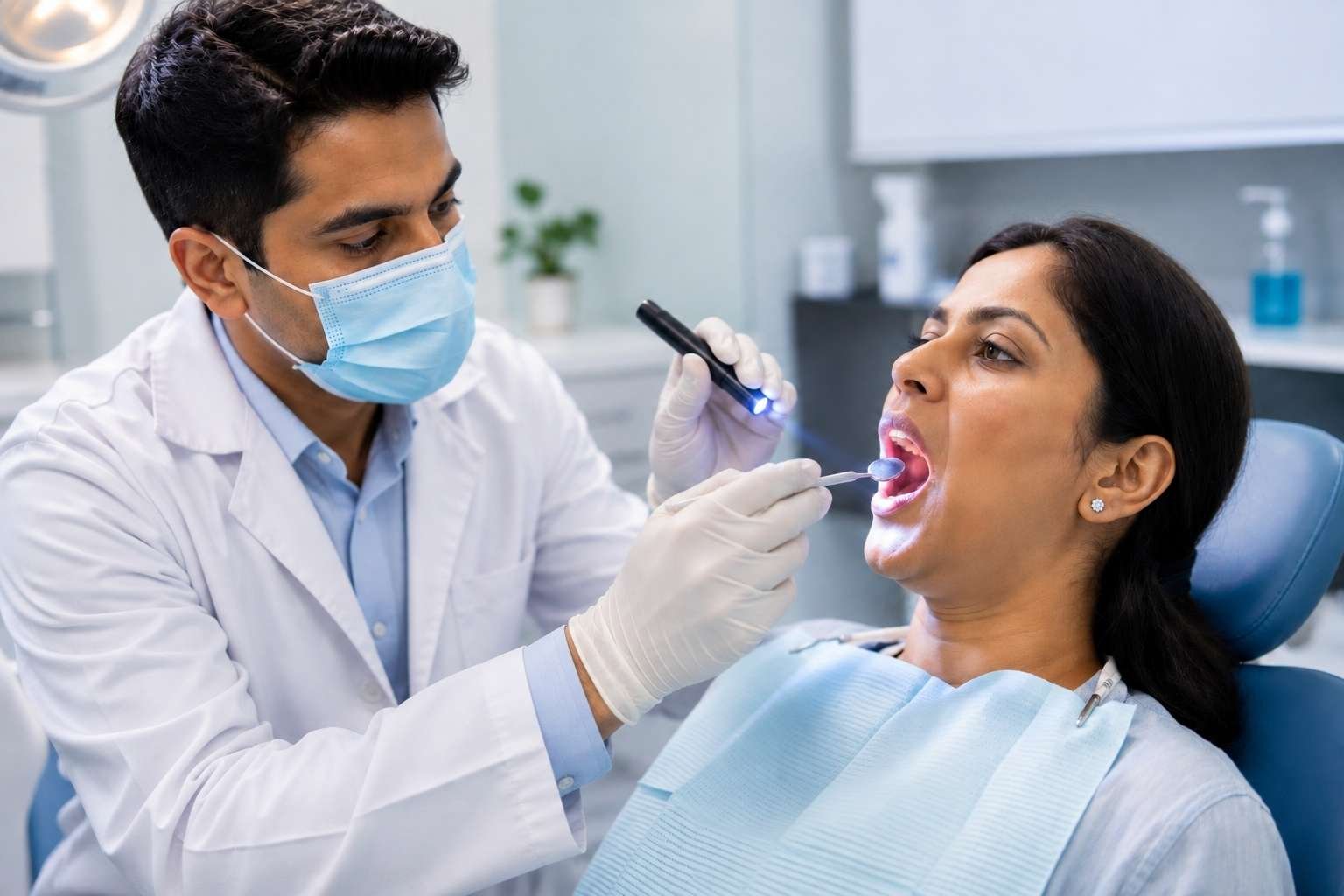
Oral cancer screening is a quick visual and physical check of your mouth, lips, tongue, and throat, done to spot early signs of abnormal tissue before they turn into something serious. It isn’t a separate procedure or a scary add-on. It’s simply built into a thorough dental checkup and takes only a few extra minutes, using nothing more than a light, a mirror, and gloved hands.
Why Is Oral Cancer Screening Important?
Oral cancer is one of the most frequently diagnosed cancers in India, largely driven by tobacco in its many local forms: gutka, paan, khaini, and smokeless tobacco. What makes it dangerous is how quietly it progresses. Early changes rarely hurt, so they go unnoticed until the disease has advanced. Despite how common the risk factors are, very few people are ever screened proactively.
This is exactly why early detection matters so much. Oral cancer caught early is generally far simpler to treat, with better outcomes and less invasive treatment needed. Caught late, treatment becomes more complex and recovery more difficult. The difference shows up clearly in outcomes: oral cancer caught early has a significantly higher five-year survival rate than cancer diagnosed after it has spread. Since early-stage changes rarely cause pain, screening is often the only way these changes get noticed before they progress.
What Happens During an Oral Cancer Screening?
A screening follows a simple, structured routine. Your dentist moves through each area of your mouth, face, and neck methodically, checking for anything that looks or feels out of place. Here’s what each step actually involves.
1. Reviewing Your Medical and Dental History
Before the physical check begins, your dentist asks about tobacco or alcohol use, any family history of cancer, and whether you’ve noticed sores, numbness, or pain anywhere in your mouth. This conversation shapes how closely certain areas are examined and is just as important as the exam itself.
2. Examining Your Face and Neck
Your dentist looks at your face and neck for any visible asymmetry, swelling, or discolouration. They also gently feel along your jawline and neck to check the lymph nodes, since swelling here can be one of the earliest physical signs of a problem elsewhere in the mouth.
3. Checking Your Lips, Gums and Cheeks
Next comes a close visual and physical check of your lips, inner cheeks, and gums. Your dentist looks for unusual white patches (leukoplakia) or red patches (erythroplakia), sores that haven’t healed, or areas of discolouration, gently feeling the tissue for any thickening or roughness that isn’t visible on the surface. Red patches in particular are watched closely, since they carry a higher chance of turning out to be significant than white patches do.
4. Examining Your Tongue and Floor of the Mouth
Your dentist checks the top, sides, and underside of your tongue, along with the floor of your mouth beneath it. This area is examined carefully because early changes here are easy to miss without a deliberate check, and it’s a common site for early-stage abnormalities to appear.
5. Checking for Lumps and Abnormal Tissue
Finally, your dentist palpates the soft tissues inside your mouth and along your neck, feeling for lumps, thickened patches, or swelling that can’t always be seen but can often be felt. This tactile check is what catches changes a visual exam alone might miss. Some clinics also use aids like a special light or a dye rinse to make abnormal tissue easier to spot, though for most routine checkups, trained eyes and hands are all that’s needed.
Why Oral Cancer Screening Deserves a Place in Every Checkup
An oral cancer screening isn’t a separate, intimidating procedure. It’s a quiet, routine part of good dental care that most people simply never had explained to them, standard in every checkup rather than an add-on, and understanding what it involves makes it far less daunting the next time you’re in the chair. If it’s been more than six months since your last checkup, or you’ve noticed a sore, patch, or lump in your mouth that hasn’t gone away, don’t wait for it to become a bigger concern.
Early detection makes all the difference. Book a dental checkup today at AK Dental Clinic, Vile Parle West, Mumbai, and get it looked at; it only takes a few extra minutes.
Frequently Asked Questions About Oral Cancer Screening
Do I need to book a separate appointment for this screening?
No. It’s already included as a standard part of a thorough routine checkup. There’s no extra step or separate visit required.
I don’t use tobacco or alcohol. Do I still need to be screened?
Yes. While tobacco and alcohol raise the risk significantly, oral cancer can still occur in people without those habits. HPV (human papillomavirus) is a recognised and growing cause, particularly for cancers at the back of the mouth and throat, and some cases simply have no identifiable cause. That’s why screening is offered to every patient, not just those with obvious risk factors.
Is there an extra charge for oral cancer screening?
No. It’s a standard part of every routine checkup, not a separate paid service.
Is Oral Cancer Screening Painful?
No. It’s a painless visual and physical check using gloved fingers and a light. There are no needles, no scans, and nothing uncomfortable involved.
How Often Should You Get Screened?
Every six months, alongside your regular dental checkup, is a sensible routine for most adults. If you use tobacco or alcohol, or you’re above age 30, treat this as a fixed part of every visit rather than something optional.