
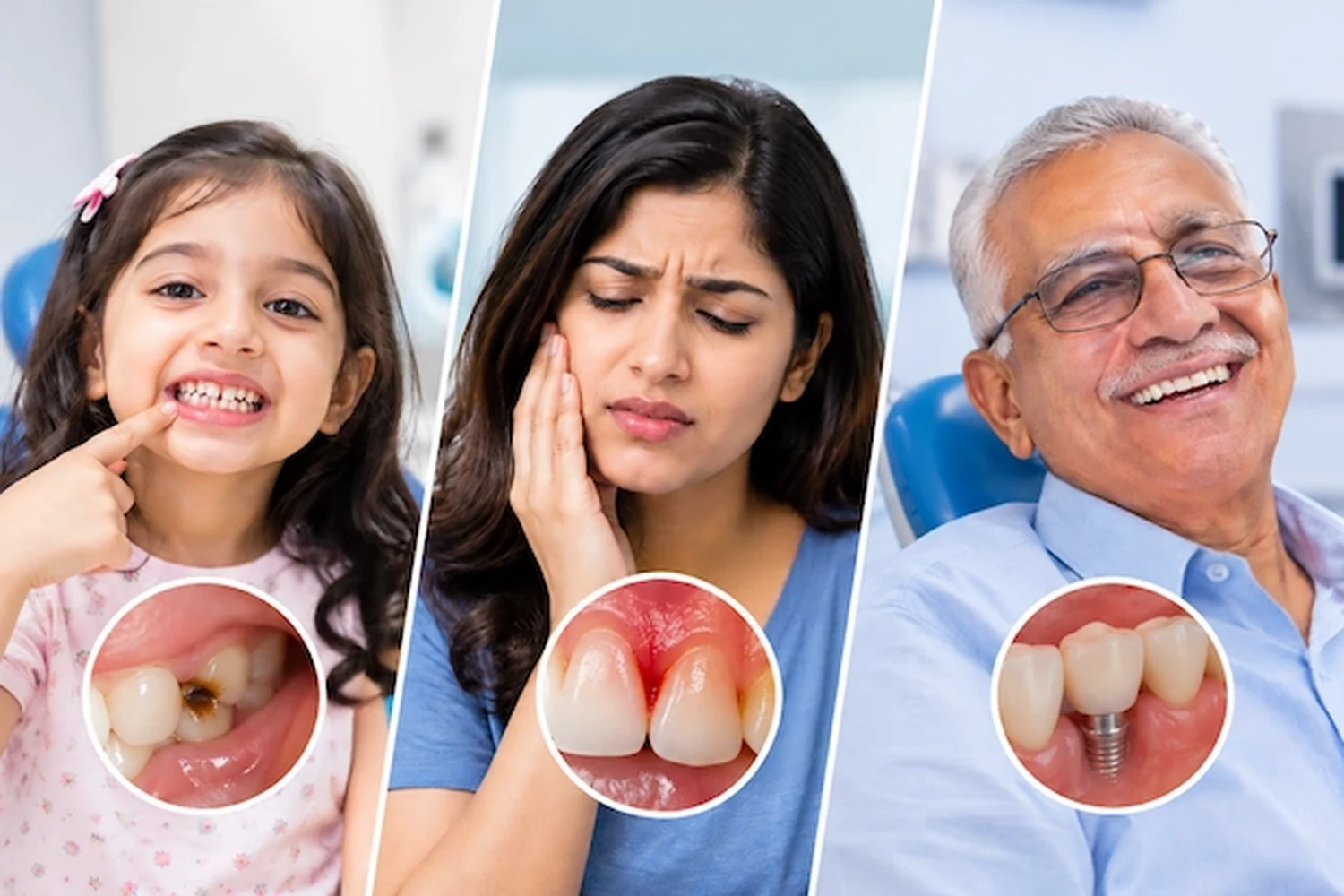
Teeth face different risks at different stages of life. Children get cavities from sugary snacks and nighttime bottles. Adults lose teeth mostly to gum disease. Seniors struggle with dry mouth and exposed roots. Most of these problems are easier and cheaper to treat when caught early.
A. Dental Problems in Children
1. Cavities
Cavities form when bacteria turn sugar into acid, and the acid eats into the tooth. Baby teeth decay fast because their enamel, the hard outer layer, is thinner than on adult teeth.
Some parents skip treatment because baby teeth fall out anyway. But baby teeth save space for adult teeth and help a child chew and speak. A badly decayed one can cause pain, swelling, and infection.
To lower the risk:
- Brush twice a day with fluoride toothpaste. Ask your dentist how much to use for your child’s age.
- Keep sugary drinks and sticky snacks to mealtimes.
- Do not let a child fall asleep with a bottle of milk or juice.
2. Thumb Sucking
Thumb sucking is normal in babies and toddlers. If it continues once adult teeth start to come in, it can push the front teeth forward or change how the jaws meet. Talk to a dentist if your child is still sucking a thumb at age five or six.
3. Injuries
Falls and sports often chip or knock out teeth. If an adult tooth comes out, see a dentist immediately, because the sooner it is treated, the better its chance of being saved. Do not put a knocked-out baby tooth back in.
B. Dental Problems in Adults
1. Gum Disease
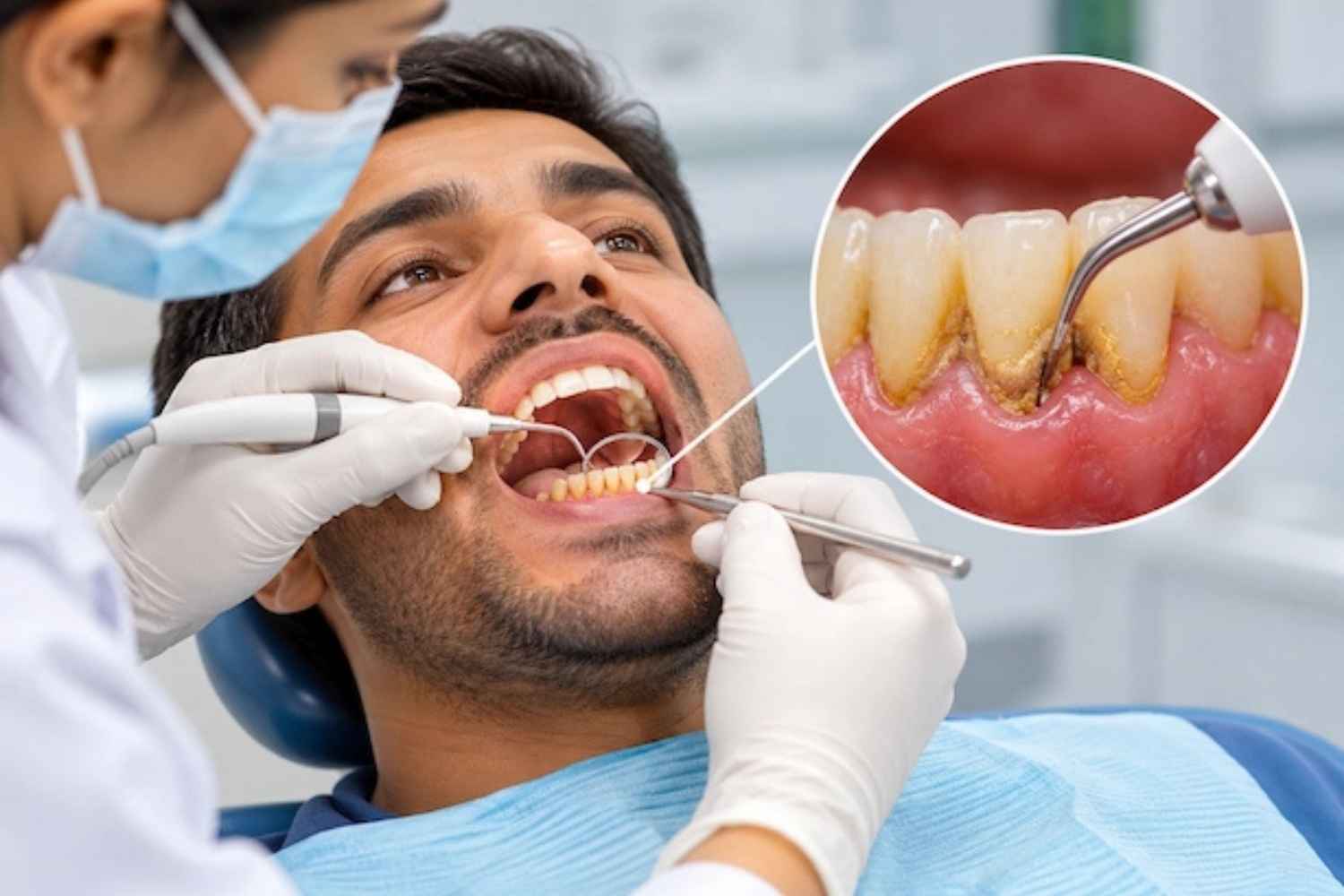
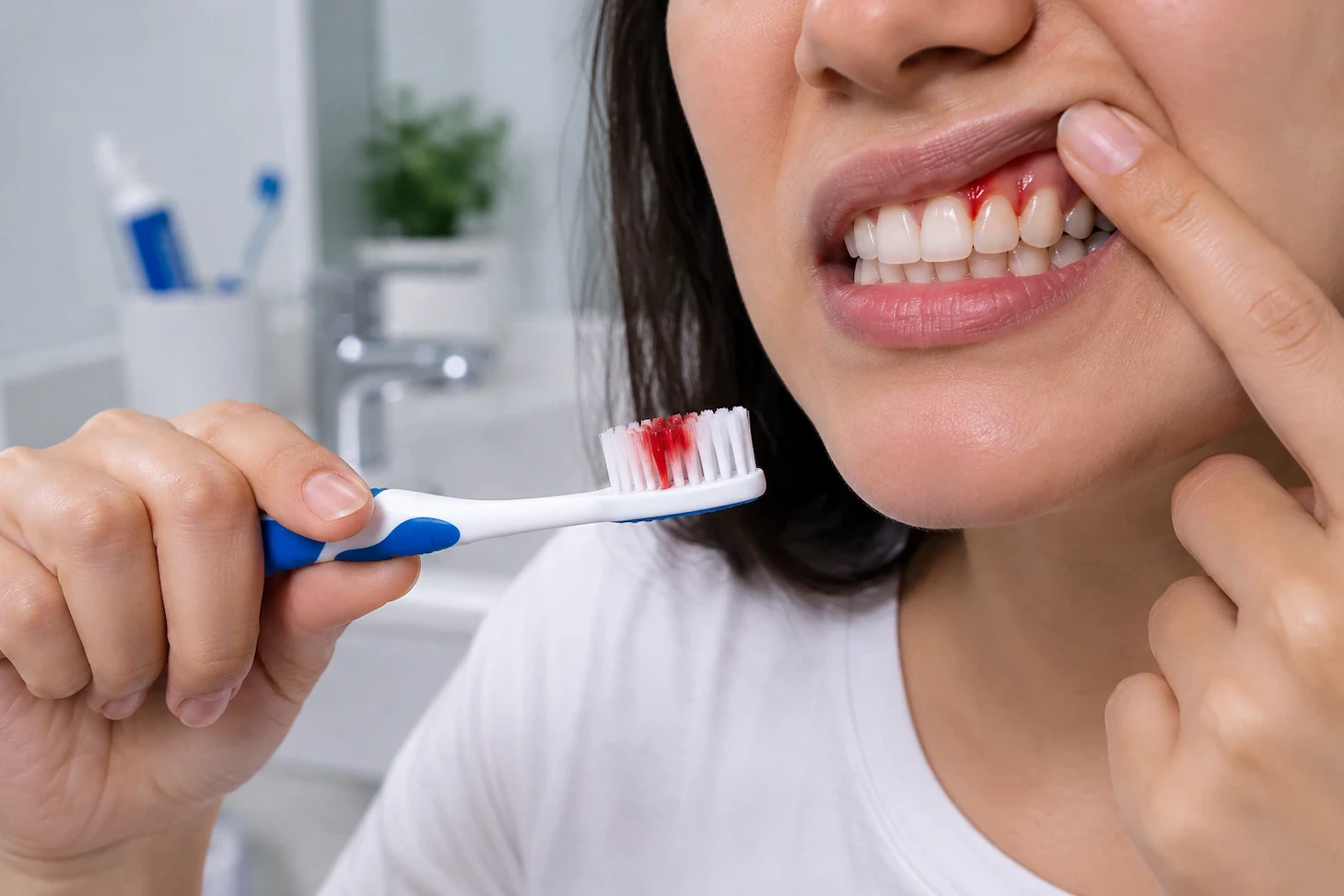
Gum disease starts as gingivitis: red, swollen gums that bleed when you brush or floss. Left alone, it can turn into periodontitis, an infection that destroys the bone holding the teeth. Early gum disease rarely hurts, so bleeding is the signal to act. Smoking and diabetes raise the risk.
2. Cavities and Worn Teeth
Adults get cavities too, often around old fillings or near the gum line. Many adults also grind their teeth in their sleep, a habit called bruxism. It wears down enamel and can cause jaw pain and morning headaches. A dentist can fit a night guard.
3. Wisdom Teeth
Wisdom teeth usually appear between the late teens and mid-twenties. When the jaw has no room for them, they can get stuck under the gum, hurt, or become infected. Not every wisdom tooth needs to come out. An X-ray shows whether yours are a problem.
4. Bad Breath
Most bad breath comes from bacteria on the tongue and between the teeth. Brushing your tongue and flossing daily usually helps. If the smell stays, a dentist can check for gum disease or a decayed tooth, and a doctor can check for other causes.
C. Dental Problems in Seniors
1. Dry Mouth
Saliva washes away food and neutralises acid. Many common medicines, including some for blood pressure, allergies, and depression, reduce it. A dry mouth gets cavities and sores more easily. Sip water through the day, and ask your doctor whether a medicine can be changed.
2. Root Decay
With age, gums often pull back and expose the tooth root. Roots have no enamel, so they decay faster than the crown of the tooth. A soft brush and fluoride toothpaste protect them, and your dentist may suggest a stronger fluoride product.
3. Missing Teeth
Losing teeth is common in older age, but it is not inevitable. For gaps, the main choices are dentures, bridges, and implants. They differ in cost, upkeep, and suitability, and the right one depends on your gums, bone, health, and budget. Dentures should be cleaned daily and checked regularly, because the gums change shape over time and loose dentures cause sores.
4. Mouth Cancer
Risk rises with age, especially for people who smoke, chew tobacco, or drink a lot of alcohol. Watch for a sore that has not healed after two weeks, white or red patches, or a lump you cannot explain. Dentists check for these signs during routine visits.
Habits That Protect Teeth at Any Age
- Brush for two minutes, twice a day, with fluoride toothpaste.
- Clean between your teeth once a day.
- Cut back on sugary snacks and drinks.
- Avoid all forms of tobacco.
- See a dentist regularly. Ask how often you need to go, as it varies from person to person.
Look After Your Teeth Early, at Every Age
The problems change with age, but the routine barely does: clean your teeth every day, limit sugar, and see a dentist before pain starts. Cavities and early gum disease are often painless, so a check-up is the only reliable way to find them. If you have not had one in the past year, book it. This article is for general information only. If you have pain, swelling, or bleeding gums, please see a dentist.
FAQs
- When should a child first see a dentist?
Most dental associations recommend a first visit by the child’s first birthday, or when the first tooth appears. - Are bleeding gums normal?
No, they are usually an early sign of gum disease. Cleaning more carefully can help, but see a dentist if the bleeding continues. - Can gum disease be reversed?
Gingivitis, the early stage, usually clears up with good cleaning and a professional scale and polish. Advanced gum disease can be controlled but the lost bone does not grow back on its own. - Do people with dentures still need dental check-ups?
Yes, Dentures wear and loosen, and the gums and mouth still need checking for infection and cancer. - Does a toothache always mean a cavity?
No, A cracked tooth, a gum infection, teeth grinding, or a sinus problem can cause the same pain. A dentist can find the cause.
Missing teeth or dentures that no longer fit?
We offer dentures, dental implants, and home-visit dentures for patients who find it hard to travel. Contact us or call +91-8850992611 to schedule your visit.