
One of the most common fears patients have before dental treatment is the belief that a root canal “kills” the tooth. This myth often causes people to delay treatment, leading to severe pain, infection, or even tooth loss. The truth is very different from what many people think.
A root canal does not kill your tooth. In fact, it is a procedure designed to save your natural tooth and relieve pain while restoring normal function. Let’s break down what actually happens during a root canal and why this treatment is often the best option for long-term oral health.
What Does “Killing the Tooth” Really Mean?
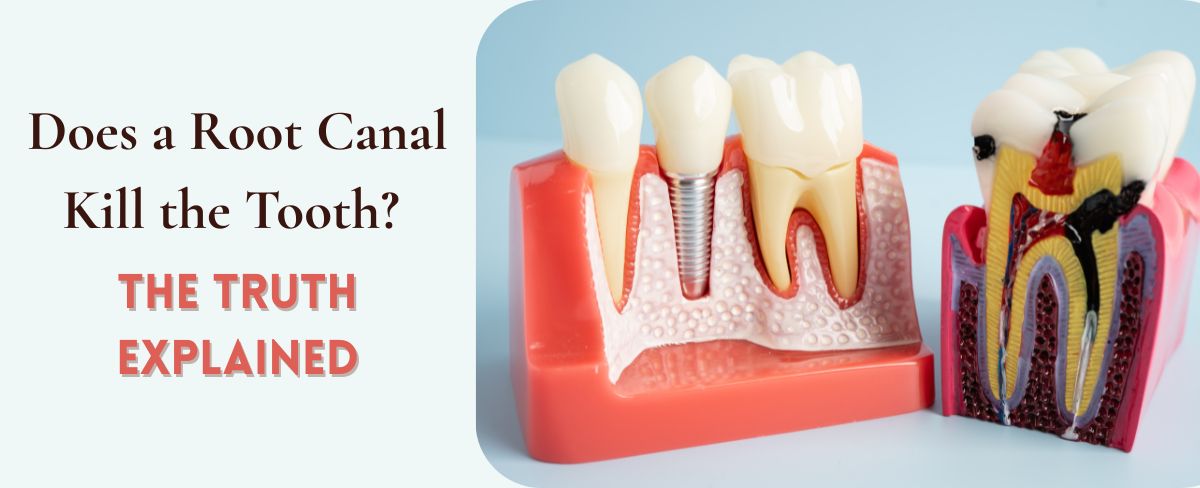
Teeth are made up of several layers. The outer enamel and dentin protect the inner pulp, which contains nerves, blood vessels, and connective tissue. When people say a tooth is “dead,” they usually mean the pulp inside the tooth is no longer alive.
However, a tooth does not rely on its pulp to stay functional once it has fully developed. The surrounding gums, ligaments, and jawbone continue to support and nourish the tooth. This means a tooth can remain healthy, strong, and fully functional even after pulp removal.
Why Is a Root Canal Needed?
A root canal is required when the pulp inside the tooth becomes infected or inflamed due to:
- Deep cavities
- Cracks or fractures
- Repeated dental procedures on the same tooth
- Trauma or injury
When pulp tissue is infected, it cannot heal on its own. If left untreated, the infection can spread to the jawbone, cause abscess formation, and eventually lead to tooth loss.
A root canal removes the infected pulp, cleans the inner canals, and seals the tooth to prevent future infection.
What Actually Happens During a Root Canal?
During root canal treatment, the dentist:
- Removes the infected or inflamed pulp tissue
- Cleans and disinfects the root canals
- Shapes the canals for proper sealing
- Fills the canals with a biocompatible material
- Restores the tooth with a filling or crown
Once this process is complete, the tooth is free of infection and pain. It continues to function like a natural tooth for chewing and biting.
Does the Tooth Become Weak After a Root Canal?
This is another common misconception. A tooth does not become weak because the nerve is removed. What actually weakens a tooth is the loss of natural structure due to decay or cracks, which is why dentists often recommend placing a crown after root canal treatment.
A crown protects the tooth from fracture, restores its strength, and allows it to function normally for many years. With proper restoration and care, a root canal treated tooth can last a lifetime.
Is a Root Canal Better Than Tooth Extraction?
In most cases, yes. Preserving your natural tooth is almost always better than removing it.
Here’s why saving the tooth matters:
- Maintains natural chewing efficiency
- Prevents shifting of nearby teeth
- Preserves jawbone health
- Avoids the need for replacements like implants or bridges
Extraction may seem like a quicker solution, but replacing a missing tooth often involves more time, cost, and maintenance in the long run.
Will the Tooth Still Feel Anything After a Root Canal?
After a root canal, the tooth will no longer feel temperature sensations like hot or cold. However, you can still feel pressure while chewing because the surrounding ligaments and tissues are still active.
This means the tooth remains part of your natural bite and continues to function normally.
Is Root Canal Treatment Painful?
Modern root canal treatment is designed to relieve pain, not cause it. Advances in anesthesia and technology make the procedure comfortable for most patients.
Any discomfort after treatment is usually mild and temporary, often related to tissue healing rather than the procedure itself. Most patients return to normal activities within a day.
Common Myths About Root Canal Treatment
Myth 1: A Root Canal Kills the Tooth
Truth: It removes infection and saves the tooth structure.
Myth 2: Extraction Is Better Than a Root Canal
Truth: Saving your natural tooth is usually healthier and more cost-effective.
Myth 3: Root Canal Treated Teeth Don’t Last
Truth: With proper care and a crown, they can last for decades.
Myth 4: Root Canals Are Extremely Painful
Truth: Modern techniques make them similar to routine fillings.
How to Care for a Root Canal Treated Tooth
After treatment, maintaining good oral hygiene is key:
- Brush twice daily with fluoride toothpaste
- Floss regularly
- Avoid chewing hard objects like ice
- Visit your dentist for regular checkups
- Get a crown placed if recommended
These steps help ensure the longevity of the treated tooth.
When Might a Tooth Still Need Removal?
While root canal treatment is highly successful, extraction may be necessary if:
- The tooth is severely cracked below the gum line
- There is insufficient tooth structure left
- Infection has caused extensive bone damage
In such cases, your dentist will discuss appropriate replacement options to restore function and aesthetics.
Final Verdict: Does a Root Canal Kill the Tooth?
No. A root canal does not kill your tooth. It removes infection, eliminates pain, and preserves the natural tooth structure so you can continue using it normally.
Delaying or avoiding treatment due to myths often leads to worse outcomes. If you’re experiencing persistent tooth pain or sensitivity, early evaluation and treatment can make all the difference.