
Losing a single tooth may seem like a small dental issue, but if left untreated, it can affect your bite, appearance, jawbone health, and overall oral function. When it comes to replacing one missing tooth, two popular options are a single tooth dental implant and a dental bridge.
While both restore function and aesthetics, their long-term impact on oral health differs significantly. This detailed comparison will help you understand which option is better for you in the long run.
Understanding the Two Options
What Is a Single Tooth Implant?
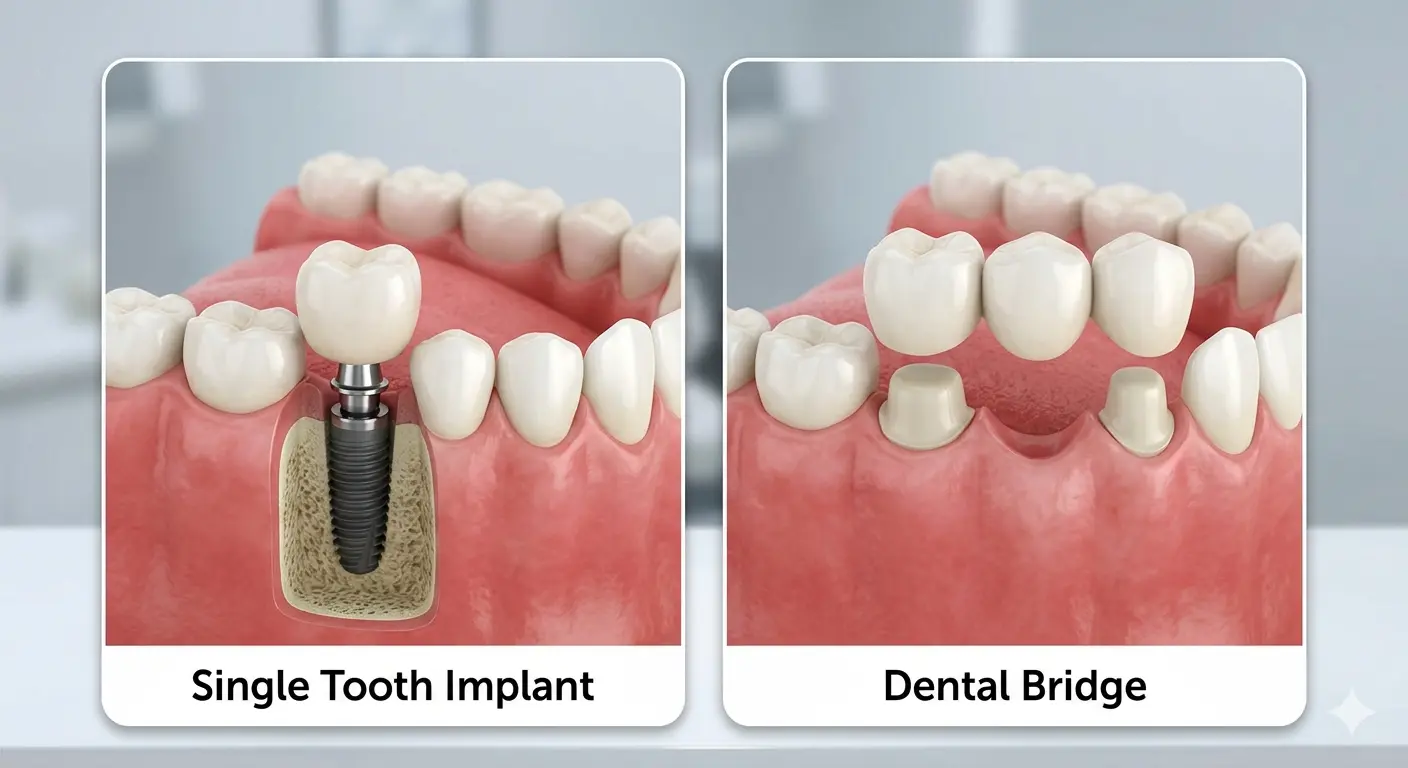
A single tooth implant involves placing a titanium post into the jawbone to act as an artificial tooth root. Once the implant integrates with the bone, a crown is placed on top to replicate a natural tooth.
This solution is independent, meaning it does not rely on neighboring teeth for support.
What Is a Dental Bridge?
A dental bridge replaces a missing tooth by anchoring an artificial tooth to the adjacent natural teeth. These neighboring teeth are reshaped and crowned to support the bridge.
While bridges offer quicker restoration, they rely heavily on surrounding teeth.
Long-Term Comparison: Implant vs Bridge
1. Longevity and Durability
A single tooth implant is designed to last decades and often a lifetime with proper care. The implant fuses with the jawbone, making it extremely stable.
A dental bridge typically lasts 7 to 12 years. Over time, the supporting teeth may weaken or develop decay, requiring replacement of the bridge.
Long-term winner: Single tooth implant
2. Impact on Jawbone Health
Dental implants stimulate the jawbone, preventing bone loss in the area of the missing tooth. This preserves facial structure and prevents a sunken appearance.
Dental bridges do not stimulate the jawbone. Bone loss continues under the missing tooth area, which may affect facial aesthetics over time.
Long-term winner: Single tooth implant
3. Effect on Adjacent Teeth
A dental bridge requires grinding down healthy adjacent teeth to place crowns. This permanently alters those teeth and increases their risk of decay or root canal treatment later.
A single tooth implant does not affect neighboring teeth at all. Each tooth remains independent.
Long-term winner: Single tooth implant
4. Oral Hygiene and Maintenance
Implants are maintained just like natural teeth through brushing, flossing, and regular dental checkups.
Bridges require extra cleaning tools like floss threaders or water flossers to clean underneath the artificial tooth. Poor cleaning can lead to gum disease and decay.
Long-term winner: Single tooth implant
5. Comfort and Function
A dental implant feels and functions like a natural tooth. It offers excellent chewing efficiency and bite stability.
A dental bridge may feel slightly different due to reliance on adjacent teeth. Over time, bridges can loosen or feel uncomfortable if supporting teeth weaken.
Long-term winner: Single tooth implant
6. Aesthetics Over Time
Implants maintain gum and bone levels, ensuring consistent aesthetics for years.
Bridges may show gum recession or shadowing near the artificial tooth as bone loss progresses underneath.
Long-term winner: Single tooth implant
7. Treatment Time
Dental bridges are faster and can often be completed within a few weeks.
Dental implants take longer because they require healing time for the implant to integrate with the bone. This can take several months.
Short-term convenience winner: Dental bridge
Long-term value winner: Single tooth implant
8. Cost Comparison Over Time
Dental bridges usually have a lower upfront cost, making them attractive initially.
Dental implants have a higher initial cost, but they require fewer replacements and less long-term maintenance. Over time, implants often become more cost-effective.
Long-term financial winner: Single tooth implant
Who Is a Better Candidate for a Bridge?
A dental bridge may be suitable if:
- You want a quicker solution
- You have medical conditions affecting bone healing
- You are not currently eligible for implant surgery
- Adjacent teeth already need crowns
Who Should Choose a Single Tooth Implant?
A dental implant is ideal if:
- You want a permanent solution
- You have healthy gums and sufficient bone
- You want to preserve adjacent teeth
- You are focused on long-term oral health
Modern implant dentistry also offers bone grafting and advanced planning, making implants possible for more patients than ever before.
Why Dentists Prefer Implants for Long-Term Results
From a long-term oral health perspective, most dentists prefer single tooth implants because they:
- Preserve jawbone health
- Maintain natural tooth structure
- Reduce future dental complications
- Offer superior comfort and aesthetics
While bridges still have their place, implants are increasingly considered the gold standard for replacing a single missing tooth.
Final Verdict: Which Is Better in the Long Run?
If you are looking at long-term durability, oral health, and cost-effectiveness, a single tooth dental implant is generally the better option.
Dental bridges can be a good short-term or situational solution, but they come with limitations that may lead to additional dental treatments later.
The right choice depends on your oral health, budget, and personal goals. A professional dental evaluation is essential to determine the best solution for your smile.
Book a Consultation
If you are unsure whether a dental implant or bridge is right for you, consult an experienced dental professional for a personalized treatment plan. Early intervention ensures better outcomes and long-lasting results.